Tuesday, 24 June 2014

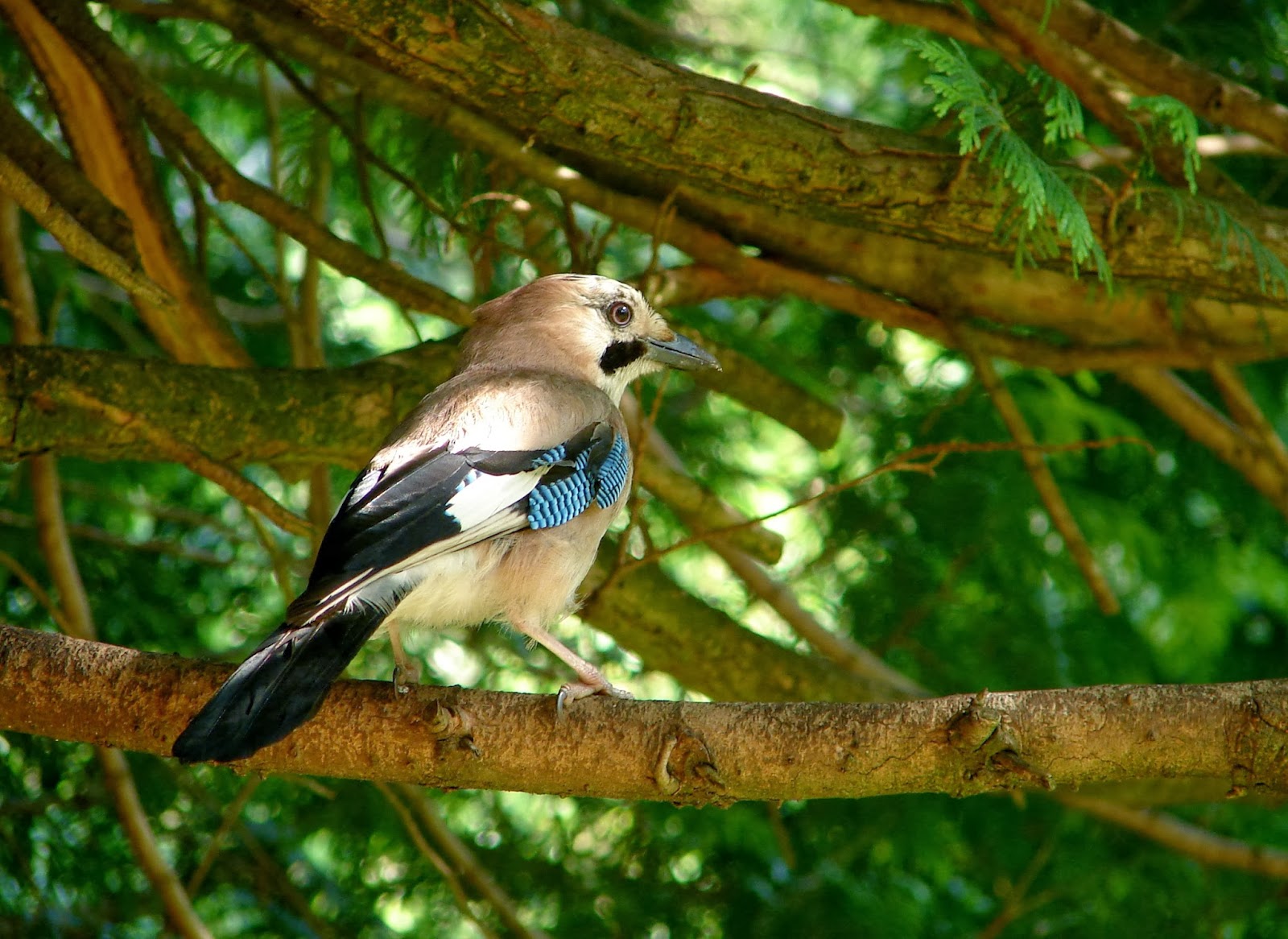
June Jays


The Jays are back, and so am I! It's been a long and needed break, but it's good to be back, with the good news that my husband has improved. I probably won't answer all your comments as before, but I will visit everyone of my blogging friends who make a comment on my blog. So sorry about this, but I hope you will understand.


This post is included in the WILD BIRD WEDNESDAY initiative by Stewart M and the blog Paying Ready Attention - Photo Gallery

Wednesday, 12 March 2014

Blogging Break.

Dear Blogger friends, You may have noticed that my visits to you have become infrequent! It's entirely out of character for me to ignore your excellent blogs, but quite simply my life right now has become complicated, necessitating a break from blogging. So sorry to have taken this long to let you know that I will be taking an extended leave, but hope to resume blogging with renewed energy when "things" are better. I will miss you all.:) 

Wednesday, 19 February 2014

Coy Wader

The Avocet   Recurvirostra   avosetta
 The Avocet, an elegant black and white wader, has a slender and delicate build. It's thin strongly upcurved bill, is swept from side to side under the water when searching for food.
 

This post is included in the WILD BIRD WEDNESDAY initiative by Stewart M and the blog Paying Ready Attention - Photo Gallery

Saturday, 8 February 2014

Homely House Sparrow


House Sparrow   Passer domesticus


The House Sparrow is very sociable. It breeds commonly around farmyards, towns and villages. The male shown here, has grey crown, red-brown temples, and large black bib. The females are uniformly more grey-brown, and have pale brown streak behind eye.

Sunday, 2 February 2014

Juvenile Jays


These juvenile Jays were about two and a half months old when they came to feed in my garden last year. The adult female lays 3-10 eggs, incubates alone during 16-19 days, then the chicks are fed by both parents. They fledge 19-23 days after hatching, and depend on their parents during 7-8 weeks before parents chase them away. The parents brought the juveniles to my garden, which enabled me to get these shots before they moved on.

Monday, 27 January 2014

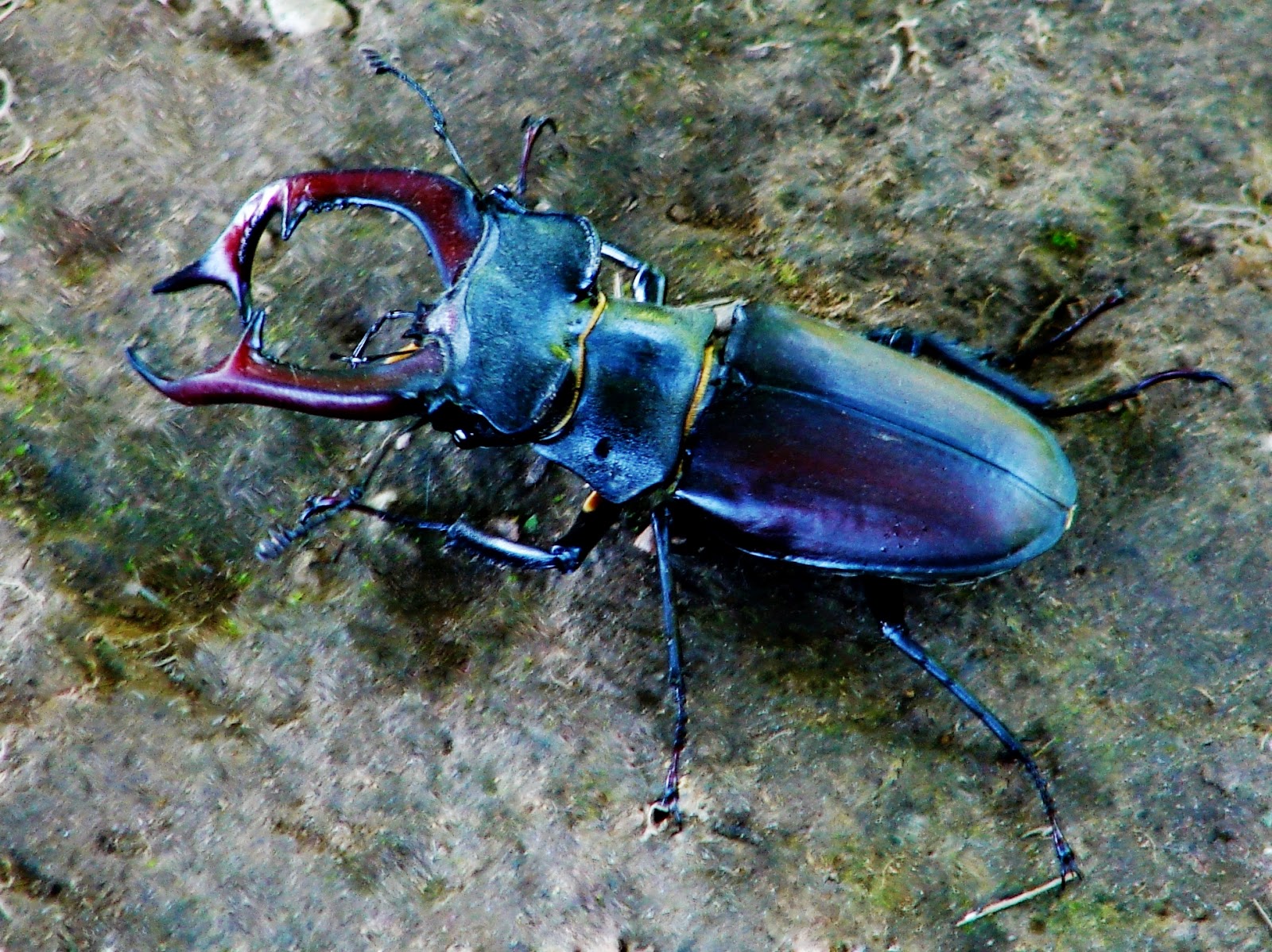
Stag - night!

The Stag Beetle  Lucanus cervus
 
 
The Stag Beetle is named for the huge jaws (antlers) of the male,which are used to fight rival males in the breeding season.The female has normal jaws. Size is variable, female up to 30 - 40mm, male to 50 mm - 70. Can be seen in parks with old trees, and old forrests. Adults feed on sap oozing from wounded trees. When I saw this beetle it was in deep shade, and I didn't want to disturb it in case it flew away, so I had to lighten the photos considerably, which accounts for the bluish tinge. Their true colour is black and chestnut. The photos are not good, but it's an interesting beetle to show you.
 

Monday, 20 January 2014

House and Garden


The House Spider    Tegenaria gigantea


The Garden Spider   Araneus diadematus


The House spider has very long legs, especially in the male. The body is brown, heavily mottled with black, with a number of clear chevrons towards the rear. The house spider builds a triangular web, then hides in a tubular retreat in a corner and waits for flies and other insects to become entangled. Females live for several years, surviving for months without food. Their habitat is, in and around houses, especially sheds, other out buildings, and also in open countryside, particularly in the south. Seen throughout Europe. The male Garden Spider Araneus diadematus is 5-8mm and the female is 10-12mm.It makes a large symmetrical orb web which acts as an aerial trap for flying insects. This spider made it's web just outside one of my windows, so I took some photos inside and some outside.

Wednesday, 15 January 2014

Focus on Finches

The male Green finch


Friday, 10 January 2014

Dingy and Dinky

The Dingy Skipper
Erynnis tages


As I still have plenty of butterfly pictures left over from last year I will be posting some now and again. The Dingy Skipper is a very moth like butterfly,at first glance I thought it was a moth. It is 14mm in size, and commonly perches with wings wide open but wraps the wings around the body at night.

Sunday, 5 January 2014

Dull Day At The Coast


The Turnstone  Arenaria interpres


Some fishermen were gutting fish not far away from where I took these shots, and threw the heads to the waiting gulls and the Turnstones  got in on the action. They run really fast, and this one got there before a nearby gull.


There were a small group of them on the rocks and down below on the seaweed covered stones.
 

No matter how I tried I couldn't  get a decent shot, especially one showing the eyes whch were very dark.


I'm posting this shot to show you the size of the Turnstone in comparison to the Herring Gull,. It almost disapears amonst the seaweed.


We only live half an hour from the coast, so often go for a seafood meal and I take my camera along just in case. disapointingly on this day at the beginning of summer it turned out to be a really dull day, so this is the best I could manage.I was pleased however to see the Turnstones busily engaged in looking for food which they find by foraging in seaweed, and by flipping over pebbles to find prey underneath.This behaviour is the origin of it's name Turnstone. The male is distinguished by slightly brighter colours, as seen in second photo. It feeds on crustaceans molluscs and worms.

Saturday, 28 December 2013

Greetings


Many many thanks for all your kind comments on my last post, and a very Happy New Year to everyone. I especially wish you and your families lots of good health, love and good fortune in 2014. I have missed you all, but hope to renew blogging some time in January. This is the only photo I have taken since the 1st of November, and it’s a view I see every day from my lounge window.
Related Posts Plugin for WordPress, Blogger...