Dear fellow bloggers i will be taking a break for a while, as yesterday i fell and i have broken my right wrist for the second time, that makes four breakages in a period of four years. my knee gives way a that's why i f all. but i'll be back when i can hold my camera again. leaving you with sunset i took some time ago.
Friday, 2 June 2023
Wednesday, 31 May 2023
THE SCOPION FLY Panorpa communis AND OTHER INSECTSI
As it is raining heavily I took these photos of insects from the archives when several years ago I was just photographing insects, and it was a wonderful experience which I am delighted to be able to share with you
The Scorpion Fly Panorpa communis
The Scorpion Fly is a strange looking insect. It is a common insect, but new to me. Unfortunately these images are of poor quality, and I was unable to take a photo of the fly with it's curled tail, the reason for it's name, and nor did I get a good shot of it's long face.
The scorpion-like tail does not sting however, but is used by the male for courtship displays, and it is in fact the males genitalia. The most interesting of Scorpion Fly facts, is that the male attracts the female by making food offerings, and the female will select the male depending what gift is offered.They grow up to 25 mm in length, and can jump as well as fly and are good for the environment because adults and larvae feed on dead insects. They are scavengers that often steal insects from spiders webs
The Marsh Fly or Snail-killing Fly
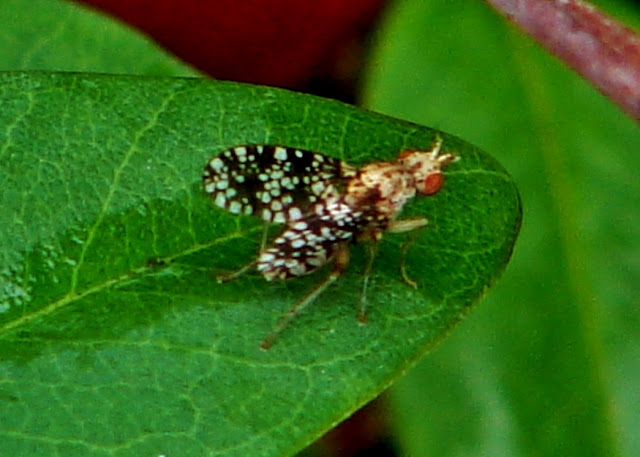
It is common along the edges of ponds, rivers, and marshy areas. The adults drink dew, and nectar, but the larvae prey on, or become parasites on slugs, snails, and finger nail clams. The pretty females often lay their eggs in fresh water snails. The Marsh Fly is 1 1/2 cm in length.
The adults feed on nectar and pollen, the Larvae generally are parasitoids of other insects.
Like some bumblebees they are brownish yellow and furry, and make a buzzing sound when flying, but unlike them, they only have two wings, instead of four. They have large eyes and long skinny legs, and short antennae, not at all like bees.
They are prodigious fliers, that can hover in midair, and have fast manoeuvring skills. They possess a stiff long tongue or proboscis, which they use for probing flowers, to sip their nectar. They make an early appearance in Spring, and are good pollinators..
They can be seen from March up to June, and visit most flowers.
Wednesday, 24 May 2023
THE FIRECREST Regulus ignicapilla.
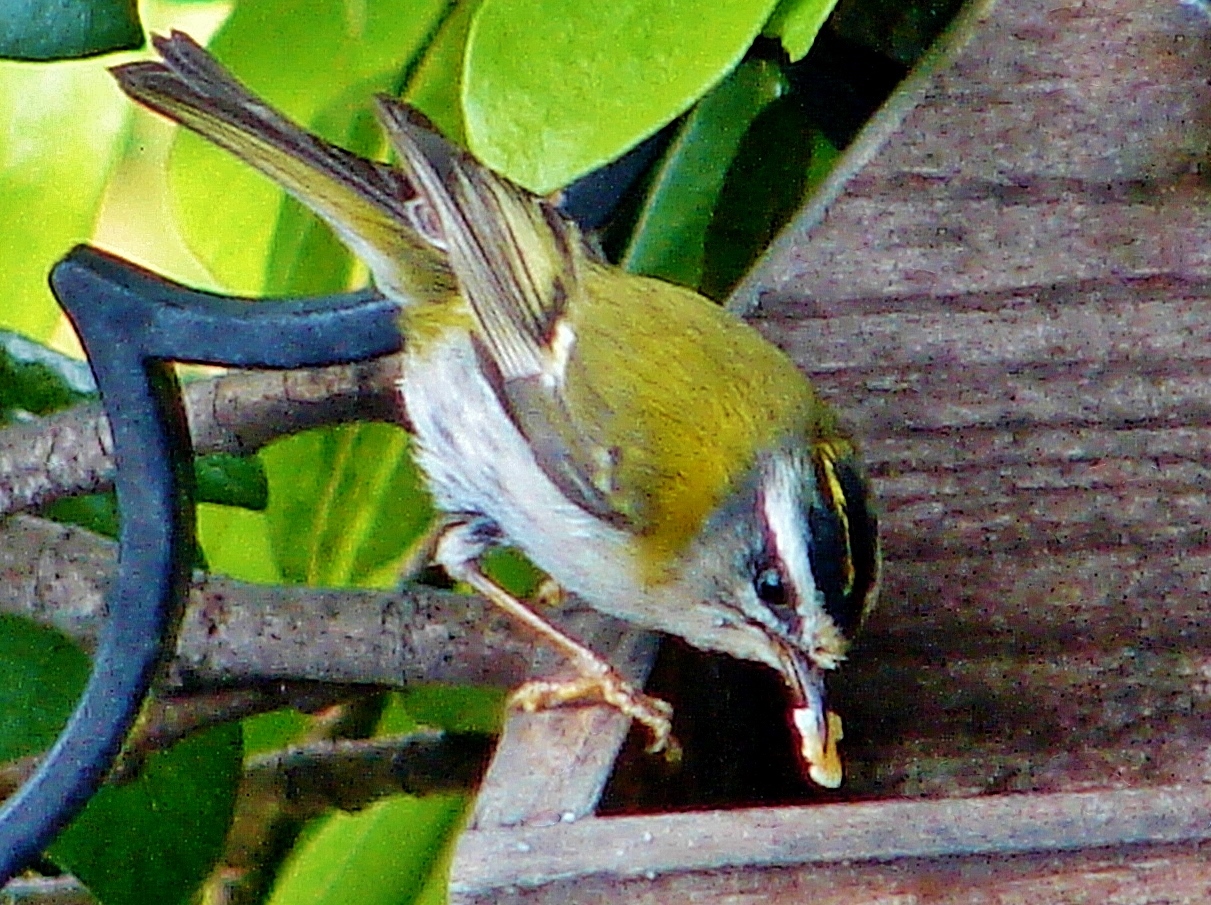
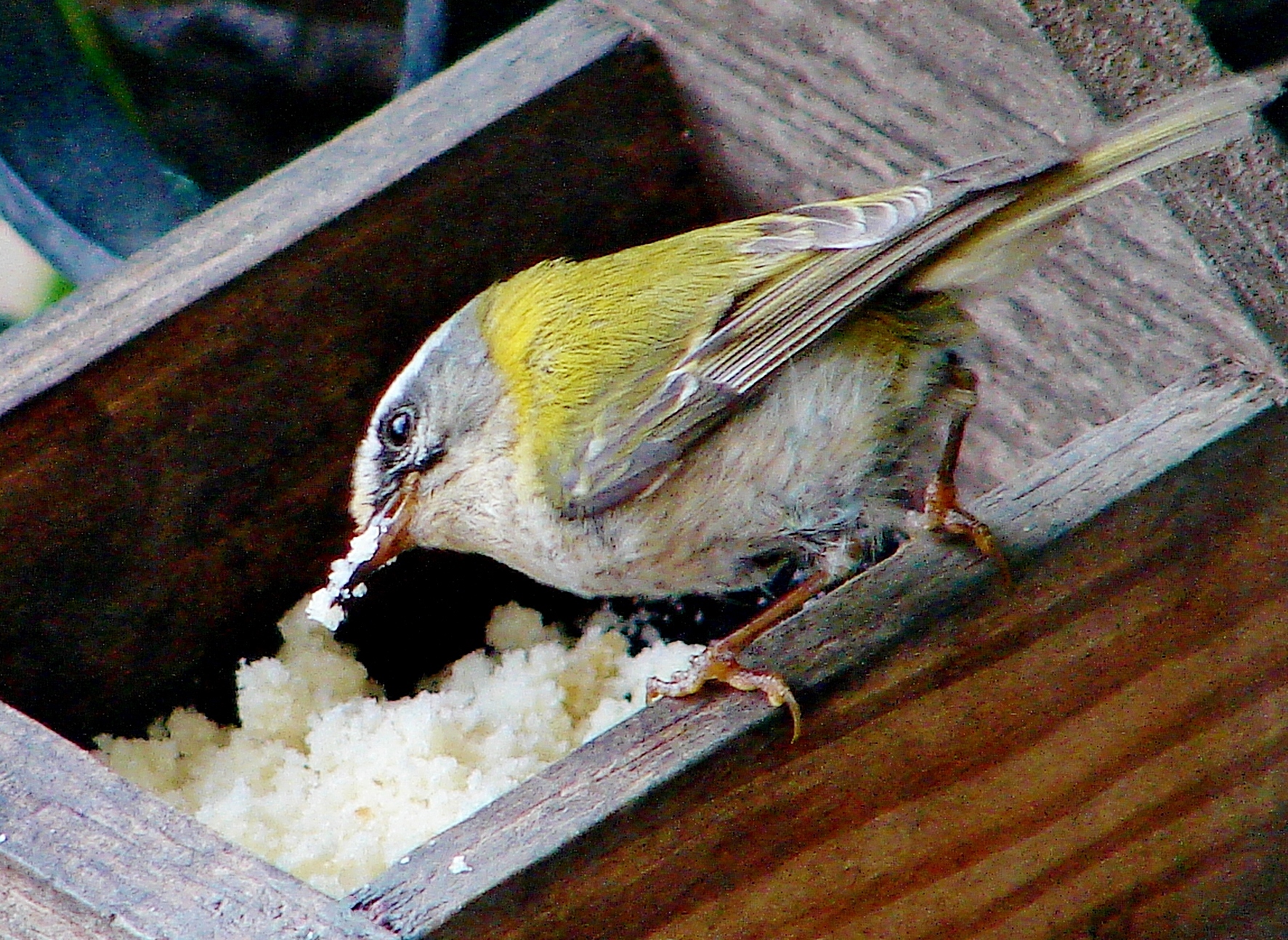
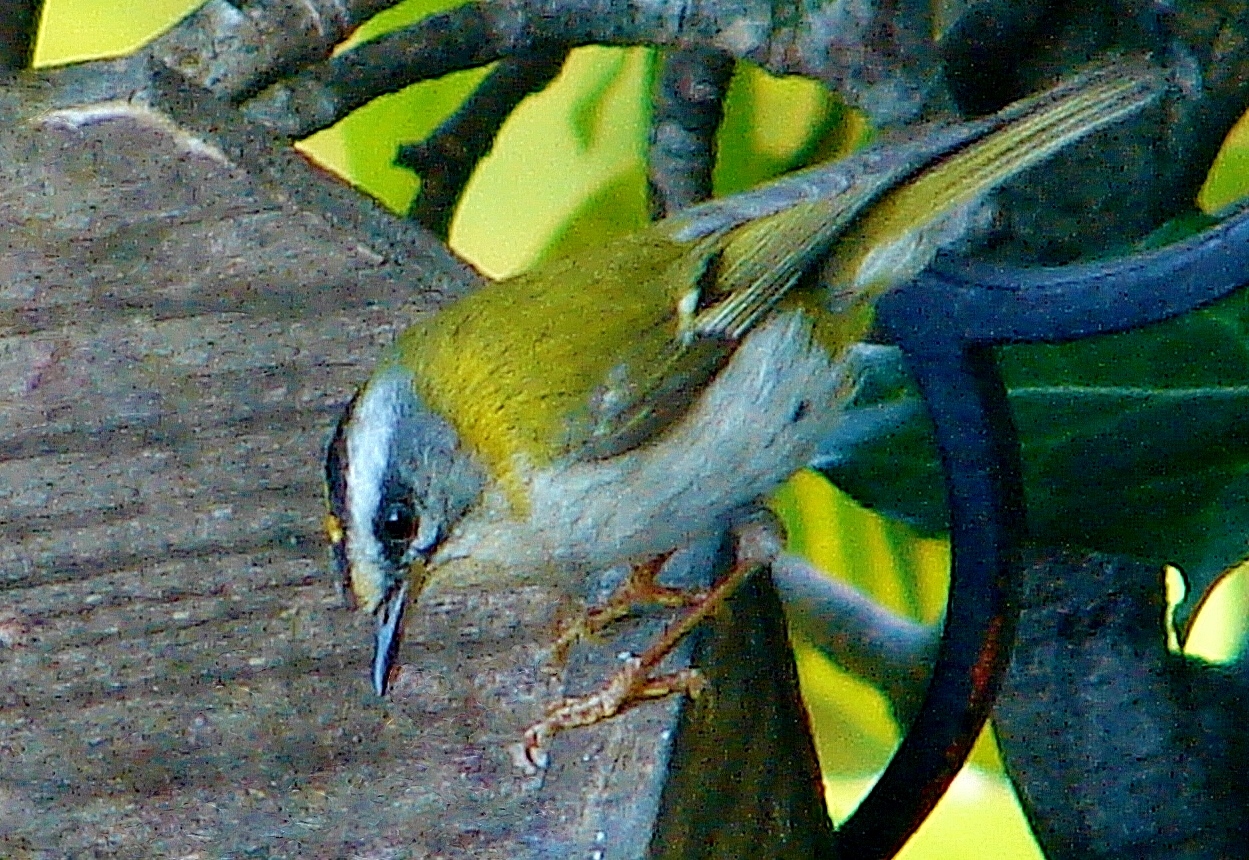
The weather is hot but not too hot, so it is very pleasant to sit outside with my camera. Over this last couple of weeks my left knee has been very painful, so I couldn't stray far. My balcony has been my resting place and main source of entertainment, and I couldn't be more pleased now that there are two Firecrests visiting my feeders which has given me great pleasure to watch and photograph. I have become a little obsessed with these petite passerines in the kinglet family, and watch them for hours.There are a lot of Cork Oak trees on the property which is a their favourite breeding place, where they build a compact three layered nest on a tree branch. They also like broadleafed trees and conifers which is another feature of the landscape, but until two years ago I had never seen a Firecrest.
These birds are extremely difficult to photograph.
They are so active, and their heads bob up and down all the time at the feeder. I must have discarded dozens of tail images.
They do not pose on a branch, but arrive unobtrusively through a gap in the railings and leave the same way. I have never seen them fly.
For a little bird with a little beak, it is amazing how much food it can carry. Often it arrives with it's beak already full of food, but still manages to take away more.
As I have already written, the Firecrest is constantly on the move.
Their nest must be quite near, as they are arriving every ten minutes.
When one leaves, the other appears immediately after, as both parents feed their chicks. Just lately however, I have been wondering if it is possible that there are two females coming to the feeder and not both sexes.
The female incubates seven to twelve eggs on her own.
These small birds are monogamous.
The average life expectancy of a Firecrest is between two to three years, but hopefully their offspring's will survive to bring joy to bird lovers like myself every year.
Wednesday, 17 May 2023
A FEW CREATURES.
Just a few photos taken on and from my balcony.
My daughter-in-law Paula's cat "Grey" sitting near the lookout.
Wednesday, 10 May 2023
THE GREAT SPOTTED WOODPECKER Dendrocopos major
This week I had a new visitor to my balcony feeder. It was a lovely surprise, and here are the photos I managed to get, however I had to lighten them a little as my balcony was in the deep shade, I hope it visits again, and I hope you enjoy a bird I have heard but not seen for several years
A Juvenile.
Just the tail in the shade, as it doesn't appear very often in the photos
Sorry about the very dirty base of the feeder, I hadn't really noticed until I saw the photos on screen. It really does spoil the aesthetics of each capture, but there is nothing I can do now to alter what was overlooked. Just the fact that it's a Nivea base is hardly attractive,in itself, but I couldn't capture a photo of the Woodpecker on a tree branch further away from the peanut feeder,.but hopefully I will next time.
Wednesday, 3 May 2023
SPRING BLOOMS and GARDEN VISITORS.
It has been very hot here in Portugal, and everything is blooming beautifully in my garden, so I wandered around taking photos of the Azalia flowers and my Spring flowering plants such as the Telopea speciosissima shrub. As he always does when he stays with me, my grandson Pedro helped enormously by pruning overgrown plants, but now our work is done for the time being, except for watering which is essential.
A pretty early morning sky.
Deep pink Azalea.
Bee on Periwinkle Vinca
Pale pink and darker pink Azalea, and a red one coming into flower in the background. The two types of oranges Azaleas come into bloom in February and have finished, and the white and bright red ones are only in bud form at the moment.
Wall Brown. Butterfly.
A neglected part of the garden with my three bunnies. One must be asleep behind the plant pot.:=)
Bee on Lilac Azalea
The Telopea Speciosissima (Dawn Fire) or (Waratah) meaning comes from the Aboriginal people, meaning beautiful red flowering tree, and the meaning of Telopea is "Seen from afar" and Speciosissima meaning beautiful.
This exotic shrub with it's huge blooms is endemic to New South Wales in Australia
My shrub is two meters high, and about a meter wide, and flowers for 6 weeks in Spring.The Waratah makes fantastic cut flowers as it is long lasting, has a straight stem and of course the large eye catching red blooms.
Dark pink Azalea
Cabbage White Butterfly.
This white flower smells divine, and attracts many bees and butterflies.
It was found by my gardener at the time growing wild, so he dug it up and planted it in my garden where it had flourished and it has grown into a huge shrub.
I saw the squirrel down below as I was having tea on my balcony. I knew it would appear up here.
It had such a happy sweet face that I had to enlarge the photo-
What a cutie.
Colourful Pansies Viola Tricolor
A large Azalea shrub, almost as large as the bird cage, which is only ever used to display plants, or keep them in the shade
The Coal Tit.
Sweet William. Dianthus babatus
They always do well on my balcony.
Apple Blossom.
A small corner of my garden.
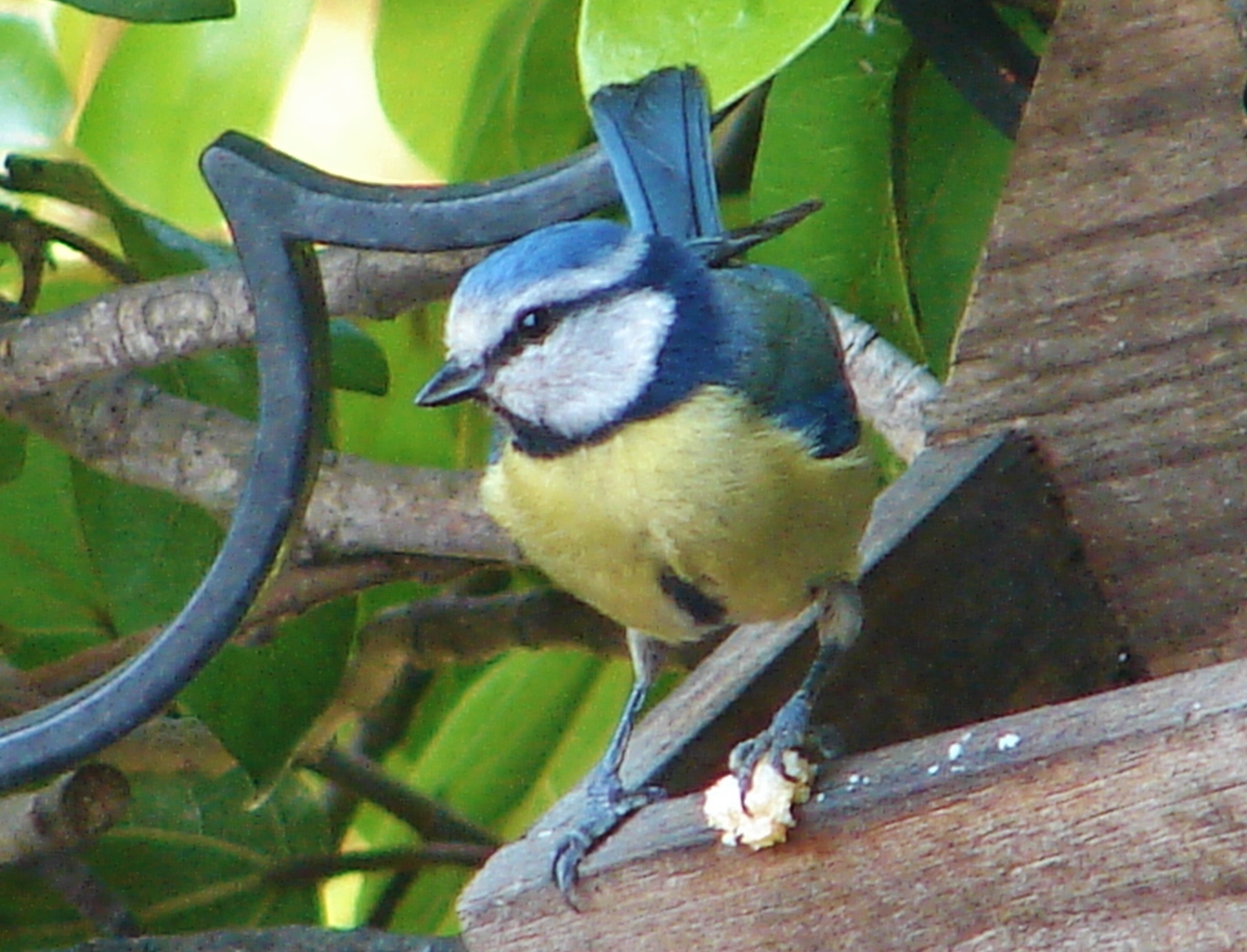
The Blue Tit.
Spray of Hawthorn flowers.
A closer look at the pretty flowers, but beware of the thorns.
I thought that I would close this post with more photos of this Spring flowering shrub which looks so vibrantly healthy that I could not resist sharing more images of the Telopea Speciosissima..
It is the floral emblem of New South Wales.
Subscribe to:
Posts (Atom)